How PulseFit Lifted App Retention 22% with Workout Push and In-App Nudges
PulseFit used Retainza push and in-app messages to bring inactive members back to their next workout — without buying more installs.
Illustrative example — mock brand & metrics

+0%
App retention
0.0×
Inactive member reactivation
0%
Push CTR on workout reminders
About PulseFit
PulseFit is a mock fitness app built for people who want short, guided workouts at home. Members track sessions, streaks and goals inside the app. Like many consumer fitness products, growth depended less on new installs and more on whether week-one members came back for week two.
Challenge
The business challenge
As PulseFit scaled acquisition, the growth team needed an engagement engine that could wake inactive members and keep active ones in a weekly rhythm — without spamming everyone the same way.
Re-engage dormant members
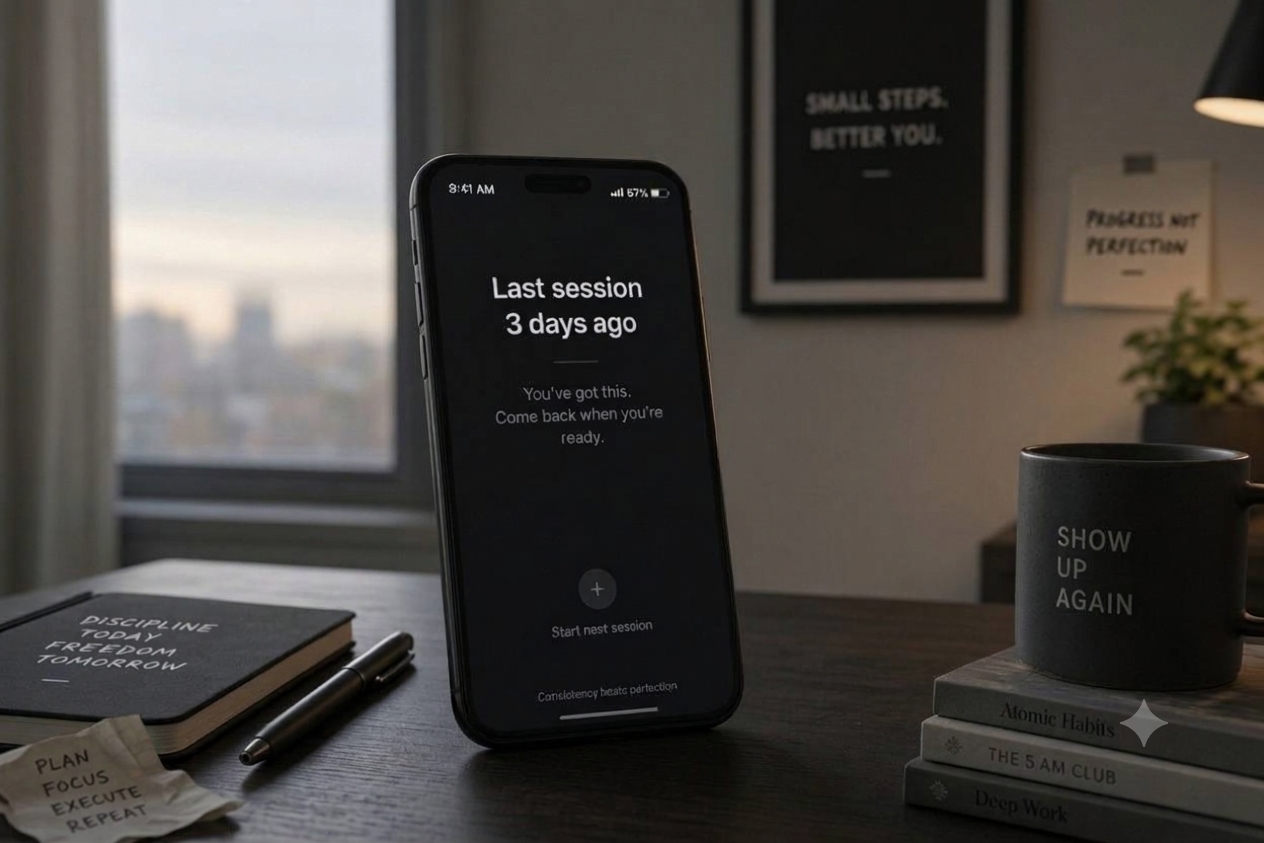
Thousands of installs went quiet after day three. Broad weekly blasts got ignored. The team needed event-aware push that fired when someone skipped a planned workout.
Guide the next useful action in-app
Push alone brought people back to a generic home screen. In-app messages had to point at the next workout, streak save or plan pick — not a feature dump.
Protect trust with frequency and quiet hours
Fitness reminders at 3am destroyed trust. Cap + quiet hours had to be first-class so retention work did not create unsubscribe churn.
Solution
The Retainza approach
PulseFit ran push and in-app on Retainza over their own FCM project — keeping delivery credentials, and building one journey that covered wake-up, onboarding and streak saves.
- 01
Behavior segments
Segments on last-session recency, plan type and streak risk so dormant, at-risk and active members got different paths.
- 02
Event-triggered push
Missed-workout and inactive-3-day events triggered timed push with a deep link into the next recommended session.
- 03
In-app follow-through
After open, an in-app card confirmed the workout and offered a one-tap start — so the visit converted into a completed session.
- 04
Quiet hours + caps
Reminders respected local quiet hours and a weekly frequency cap so the same member was never hammered across channels.
01
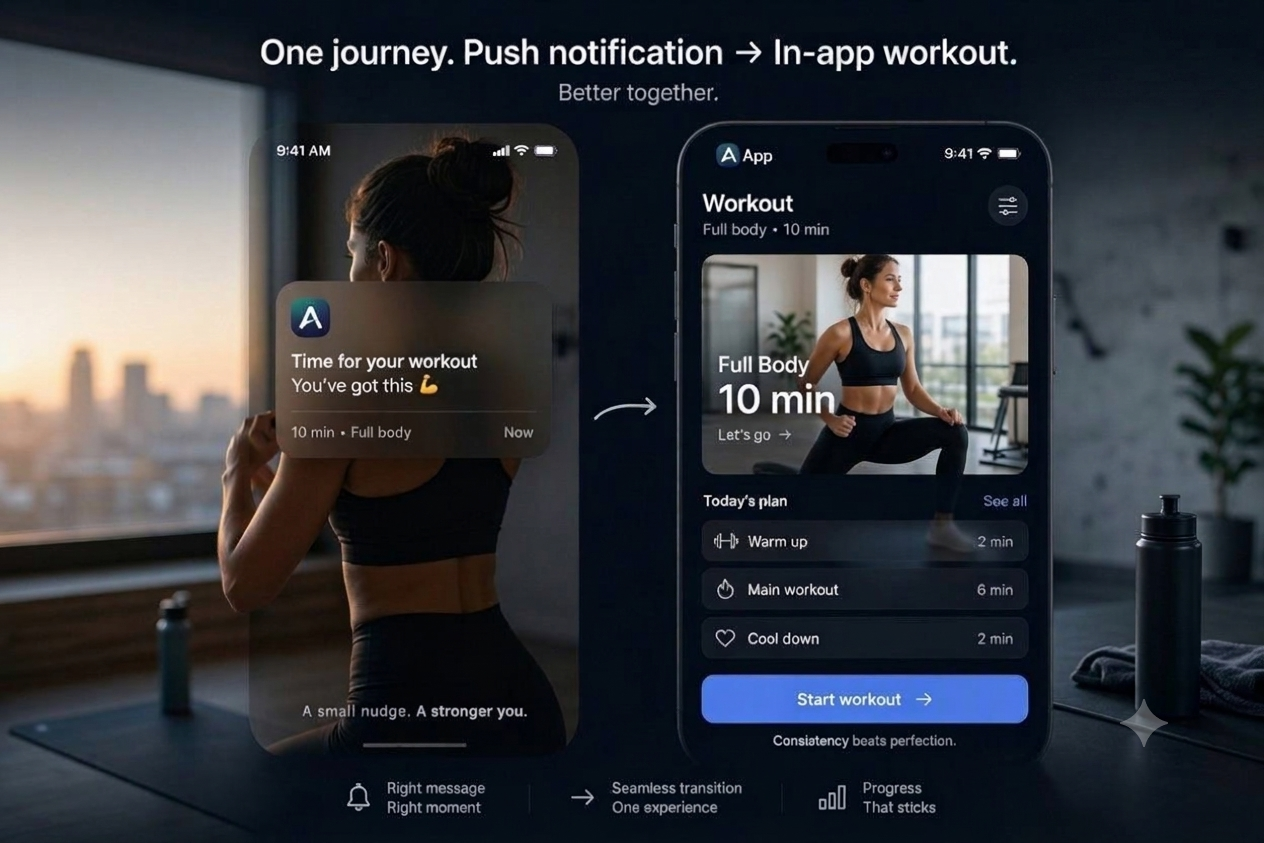
Wake-up journeys for dormant members
Instead of a single weekly blast, PulseFit built a short reactivation path: day-3 inactive push, day-5 in-app if they opened but did not start, day-7 digest only for members who still had email on. Each step dropped out the moment a workout was logged.
02
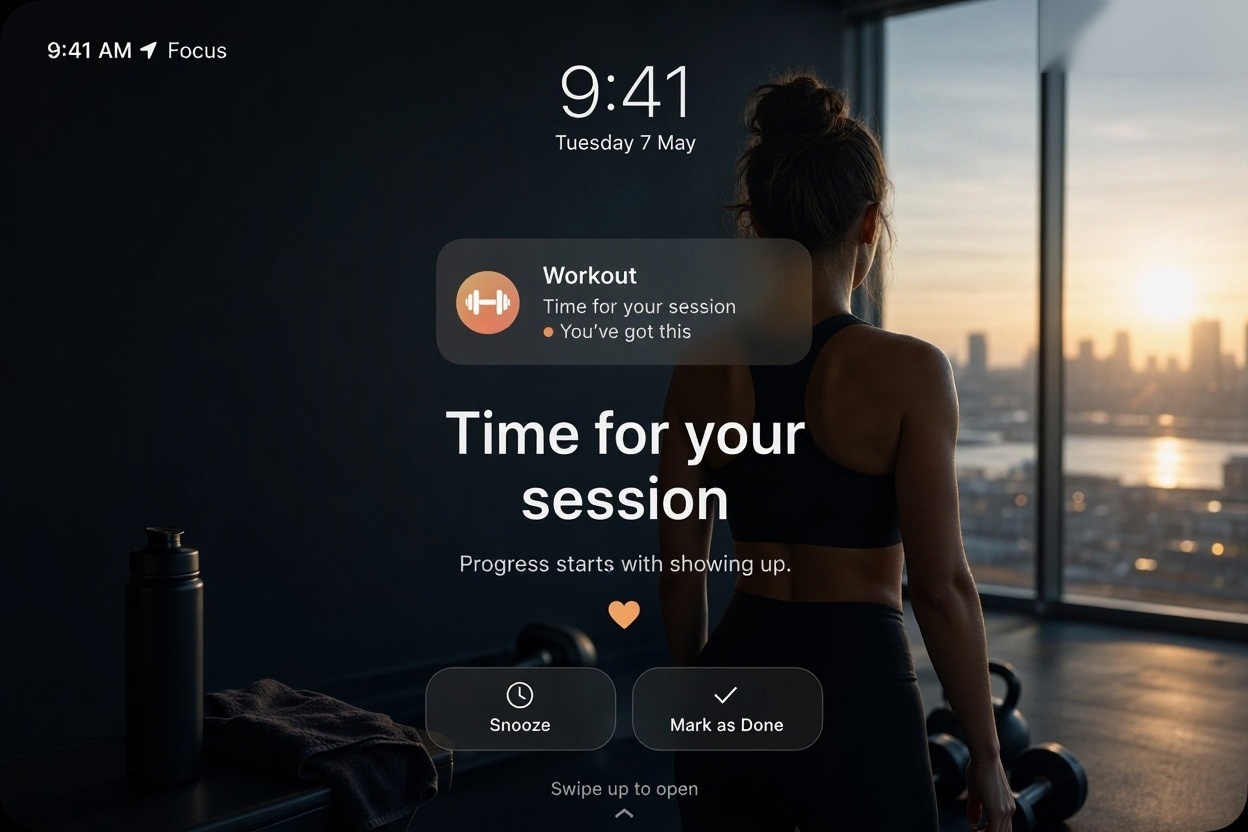
In-app nudges that finish the job
Push recovered attention. In-app recovered the session. Cards highlighted the next circuit, remaining streak hours and a single primary action — so the CTA competed with nothing else on screen.
03
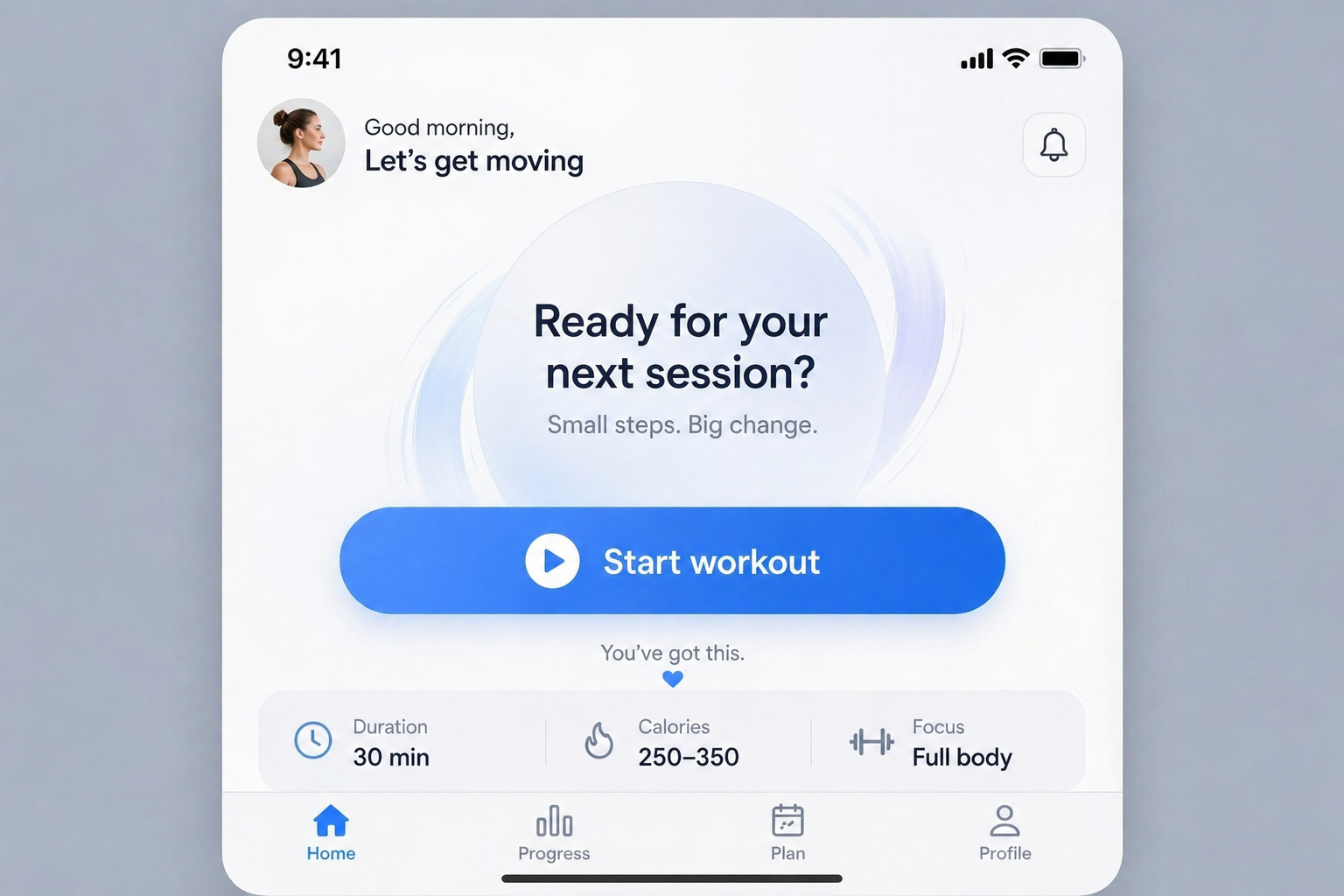
Measuring what actually moved retention
The team compared members in the journey against a holdout. Lift showed up as week-1 and week-4 retention, not vanity opens. Push CTR and in-app completion became leading indicators for the retention number on the card.
We stopped guessing who was slipping. Segment on last workout, fire a push, then land them on the exact session in-app. Retention moved because the message matched the moment.
Products used
- Push notifications (FCM)
- In-app messages
- Segments & filters
- Event-triggered campaigns
- Deep links
- Quiet hours & frequency caps
Results
Retention
App retention rose about 22% for members exposed to the wake-up journey versus holdout.
Reactivation
Inactive members returned at roughly 2.1× the prior baseline within ten days of the first nudge.
Message quality
Workout reminder push hit about 31% CTR; in-app completion after open became the north-star leading metric.
Trust
Quiet hours and caps cut mute-rate complaints while relevant sends stayed high for at-risk cohorts.
Stop burning budget on engagement.Same tools. Less cost. Less complexity.
Book a demo, or start engaging customers today.
Not ready to sign up? Get a free retention plan.
Tell us your app and we'll send which users to reach, on which channel, and when, within one business day.