Mobile app retention: what actually moves the number
Most retention advice is about notifications. The bigger levers are onboarding, timing and knowing when not to send. A practical guide.
Retention is usually framed as a messaging problem, which is why so much advice reduces to "send more push notifications". That advice is mostly wrong, and following it tends to make the number worse.
Retention is decided early
Most apps lose the majority of their users in the first week. That means the work with the highest leverage happens before any lifecycle campaign runs: getting someone to the first genuinely useful moment as fast as possible.
If a user never reaches that moment, no notification sequence will rescue them. It is worth being honest about which problem you actually have before investing in the messaging one.
Message the job, not the calendar
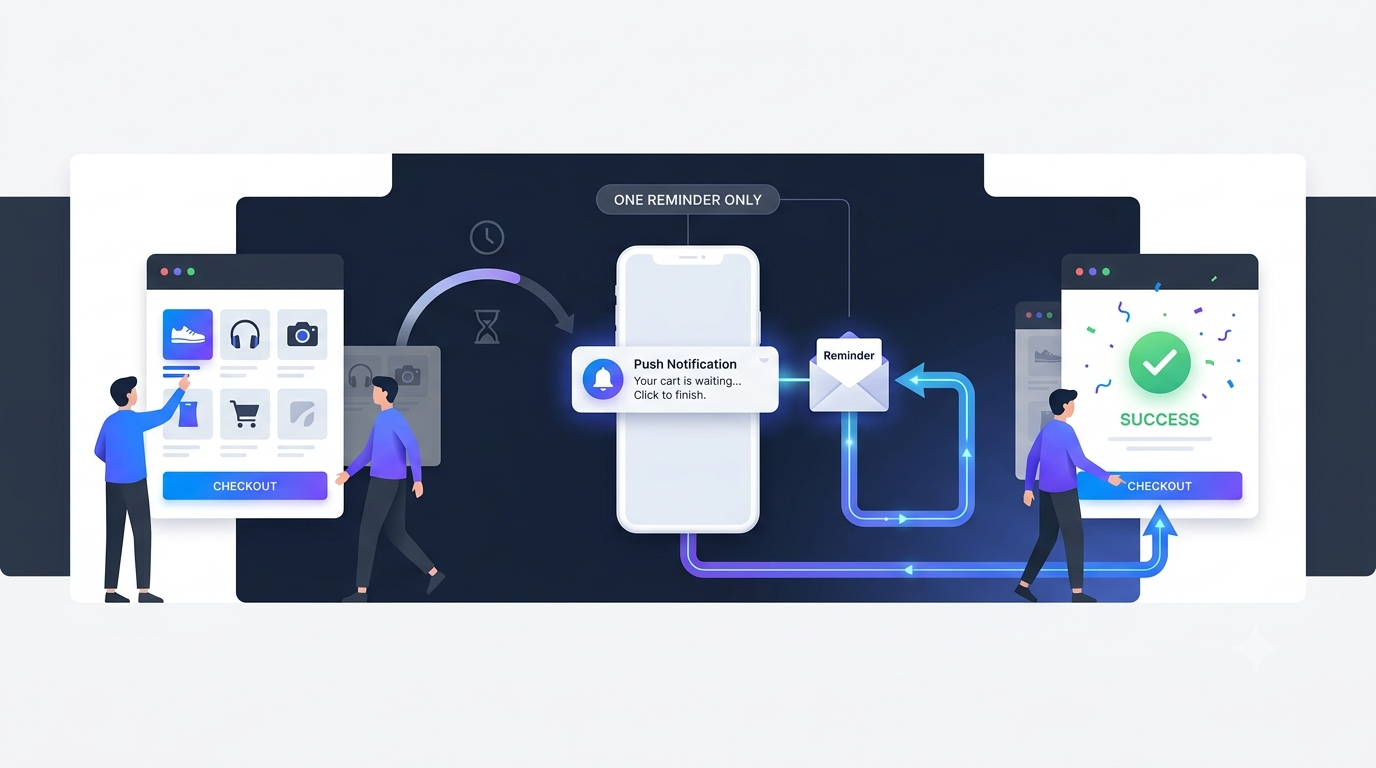
A weekly send exists because someone scheduled it. A triggered send exists because the user did something. The second consistently outperforms the first, because it arrives when it is relevant.
Useful triggers tend to share a shape: the user started something and did not finish it.
- Added to cart, did not check out.
- Started onboarding, stopped halfway.
- Trial ending, has not subscribed.
Each of these has a natural delay attached. A cart nudge an hour later is helpful; the same nudge four days later is noise.
Know when to stop
The most underrated retention feature is the ability to not send.
- Exit conditions. If someone completes the action mid-sequence, the rest of the sequence should stop. Emailing a user about a cart they already checked out reads as broken.
- Frequency caps. A user who triggers three campaigns in an afternoon should not receive three notifications.
- Quiet hours. A 3am push does not get read; it gets your app's notifications disabled.
Users rarely tell you they are annoyed. They just turn notifications off, and then you have lost the channel permanently.
Use the right channel for the message
Different messages deserve different channels:
- Push is interruptive. Reserve it for things that are timely and personal.
- Email tolerates length and can be read later. Good for summaries and anything with detail.
- In-app reaches the user when they are already engaged, which makes it the right place for feature discovery.
Sending the same message across all three at once is the fastest way to teach people to ignore all three.
Measure the right thing
Open rates measure the subject line, not the outcome. Better questions:
- Did the user complete the action the message was about?
- Did users who received it retain better than a holdout who did not?
- Did notification opt-outs rise after this campaign shipped?
That last one is the cost side of the ledger, and it is the one most teams never look at.
Where Retainza fits
Retainza covers the mechanics this requires: event triggers with delay and cooldown, segment filters evaluated at send time so finishers drop out, frequency caps and quiet hours, and deep links that land a user on the screen the message was about.